How To Understand Islamism: Read What Its Leaders Actually Say - Barry Rubin
To read Yusuf al-Qaradawi's 1984 book Islamic Education and Hasan al-Bana
is to get an Islamic education. Nobody should be allowed to talk about
Islam or political Islamism without having read this or similar texts.
Just as Marx claimed in the Communist Manifesto of his movement,
the Islamists, too, disdain to conceal their aims. It's easy to see why
al-Qaradawi is the leading Sunni Islamist thinker in the world today. He
knows how to express his ideas clearly and persuasively.
Al-Qaradawi does not put the emphasis on Western strength or even
on injustice, but on Muslim weakness. He does not flinch from facing the
humiliations of the situation. He promises - as the Arab nationalists
did 60 years ago - that his doctrine will bring rapid development and
tremendous power. Like Soviet leader Nikita Khrushchev once did,
al-Qaradawi pledges to the West: "We will bury you."
Islamism is a formula to turn inferiority into superiority, to
make the Muslim world number one. It uses religion and is formed by key
themes in Islam, but ultimately it has nothing to do with religion as
such. This is a political movement. Al-Qaradawi is far more
sophisticated than a demagogic firebrand.
Western observers often take for granted or discount the
seriousness of a movement claiming that it is a direct instrument of
God's will. They are used to subverting far weaker contemporary Western
religious impulses, or look at those from the past that crumbled in a
test of wills with rationalism, modernism, material interests, and
personal hypocrisy.
The key challenge is not to cite passages from original Muslim
theology to "prove" that Islam is always unchanging and inflexible or to
ignore Islam as a factor completely, but to look at the movement's
modern strategy and tactics. Almost 30 years after al-Qaradawi clearly
explained the movement's ideas, the opponents of Islamism have barely
begun their attempt to understand and to educate others on this
ideology. (PajamasMedia)
Summer Plans - Jennifer Rubin
While you are probably nailing down summer camps or family trips, there
is another view of how kids should spend their time. The Jewish News
Service reports: "The Palestinian terrorist organization Islamic Jihad
held a summer camp in order to groom what a spokesman called a 'strong
resisting generation' of Palestinians to fight Israel."
On the day that those jihadi camps are shut down, the incitement
stops and the missiles from Gaza stop, there will be peace. Not before.
(The photos of children being groomed into terrorists can be found here. ) (Washington Post)


Contentions
Why Palestinians Block Wall Changes
Jonathan S. Tobin
| @tobincommentary 06.13.2013 - 1:55 PM
06.13.2013 - 1:55 PM


As I predicted two months ago,
the prospects that Jewish Agency Chair Natan Sharansky’s fair-minded
plan for changes at Jerusalem’s Western Wall will be implemented have
run into an impassable obstacle. Sharansky’s plan was to create a third
section of the Kotel that would create a space for egalitarian services
that would remove a source of conflict between Orthodox and non-Orthodox
worshipers. It has been met with generally good reviews among both
Israelis and Diaspora Jews who don’t like the way this sacred place has
become for all intents and purposes an open-air Orthodox synagogue
rather than a place of pilgrimage for all Jews. But as nasty and as
bitter as the infighting between Jewish factions may be, the real
conflict in the city remains the one between Israelis and Palestinians.
The Jerusalem Post reports today that the Palestinian Authority’s religious affairs minister has said it will not permit Israel to change the entrance to the Temple Mount—which adjoins and looks down on the Wall Plaza—in order to expand the area where Jews may worship at the remnant of their ancient holy place. But the motivation of this veto isn’t pure spite. Just as they have used their power to set off violence and riots to protest even the most harmless alterations to the area in the last 20 years, Palestinian leaders are determined to stop Sharansky’s scheme in its tracks because they regard all of the Old City as not only theirs by right but a place that will be theirs in the event of any peace deal. Rather than this issue being a purely internecine conflict between women who wish to wear prayer shawls and read Torah and those Orthodox adherents who want to prevent them from doing so, the question of who is in charge at the Kotel still shrinks in significance when placed in the context of the Palestinian struggle to return to a period of history when Jews had no rights in Jerusalem.
The problem is that in order for Sharansky’s plan to be implemented, alterations must be made to the Mugrabi Bridge that provides access to the Temple Mount from the Wall Plaza. Israel has sought to renovate the bridge in recent years, a move that would only benefit Muslims and the foreign tourists who visit the mosques on the hill (Jews are forbidden to pray there), but it has been prevented from doing so by the demands of the Muslim Wakf which administers the Temple Mount.
The issue here isn’t just preservation of an ancient site in pristine condition since the Temple Mount has already been the scene of massive vandalism committed by the Wakf, which is determined to ignore or bury the evidence of the Jewish origins of the place. The Wakf claims the Kotel is theirs and rejects Jewish sovereignty over any part of it or the city that surrounds it as well as any association with Judaism or the history of the Jewish people. Palestinian Authority leaders and their media have repeatedly claimed that the ancient temples were not built on the Mount where Muslim conquerors subsequently built mosques, just as they deny the associations of the Jews with the rest of their ancient homeland. The rejection of the Sharansky plan is a function of the desire of the PA to exercise control over the entire Old City.
The PA and the Wakf don’t want to stop the expansion of the areas where people can pray at the Wall only because they wish to discomfit the Jews but because they envision administering it themselves in the future.
The dispute between the Women of the Wall and Orthodox authorities is a significant issue that can poison the relationship between Israel and the vast majority of American Jews who affiliate with non-Orthodox denominations. But the PA’s pronouncement is a reminder that the real fight in Jerusalem is not between Jews. So long as Palestinians are determined to reverse the verdict of history and return Jews to a subordinate status in their ancient capital, the spat between Jewish factions will have to wait.
The Jerusalem Post reports today that the Palestinian Authority’s religious affairs minister has said it will not permit Israel to change the entrance to the Temple Mount—which adjoins and looks down on the Wall Plaza—in order to expand the area where Jews may worship at the remnant of their ancient holy place. But the motivation of this veto isn’t pure spite. Just as they have used their power to set off violence and riots to protest even the most harmless alterations to the area in the last 20 years, Palestinian leaders are determined to stop Sharansky’s scheme in its tracks because they regard all of the Old City as not only theirs by right but a place that will be theirs in the event of any peace deal. Rather than this issue being a purely internecine conflict between women who wish to wear prayer shawls and read Torah and those Orthodox adherents who want to prevent them from doing so, the question of who is in charge at the Kotel still shrinks in significance when placed in the context of the Palestinian struggle to return to a period of history when Jews had no rights in Jerusalem.
The problem is that in order for Sharansky’s plan to be implemented, alterations must be made to the Mugrabi Bridge that provides access to the Temple Mount from the Wall Plaza. Israel has sought to renovate the bridge in recent years, a move that would only benefit Muslims and the foreign tourists who visit the mosques on the hill (Jews are forbidden to pray there), but it has been prevented from doing so by the demands of the Muslim Wakf which administers the Temple Mount.
The issue here isn’t just preservation of an ancient site in pristine condition since the Temple Mount has already been the scene of massive vandalism committed by the Wakf, which is determined to ignore or bury the evidence of the Jewish origins of the place. The Wakf claims the Kotel is theirs and rejects Jewish sovereignty over any part of it or the city that surrounds it as well as any association with Judaism or the history of the Jewish people. Palestinian Authority leaders and their media have repeatedly claimed that the ancient temples were not built on the Mount where Muslim conquerors subsequently built mosques, just as they deny the associations of the Jews with the rest of their ancient homeland. The rejection of the Sharansky plan is a function of the desire of the PA to exercise control over the entire Old City.
The PA and the Wakf don’t want to stop the expansion of the areas where people can pray at the Wall only because they wish to discomfit the Jews but because they envision administering it themselves in the future.
The dispute between the Women of the Wall and Orthodox authorities is a significant issue that can poison the relationship between Israel and the vast majority of American Jews who affiliate with non-Orthodox denominations. But the PA’s pronouncement is a reminder that the real fight in Jerusalem is not between Jews. So long as Palestinians are determined to reverse the verdict of history and return Jews to a subordinate status in their ancient capital, the spat between Jewish factions will have to wait.
 Print
Print Send
Send Comment
 RSS
RSS


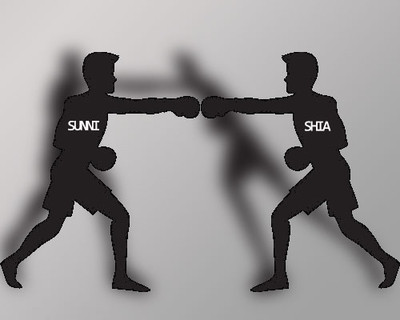 Developments
in Syria are unfolding quickly, as the country's civil war takes new
twists and turns every week, and the impact of the conflict on the
Middle East (and beyond) is growing.
Developments
in Syria are unfolding quickly, as the country's civil war takes new
twists and turns every week, and the impact of the conflict on the
Middle East (and beyond) is growing.